
Today we are speaking with Maciej Kowalonek, Head of the Foreign Trade Office of the Polish Investment and Trade Agency (PAIH) in Serbia. PAIH actively supports the strengthening of economic ties between Poland and Serbia, promotes investment opportunities, and facilitates cooperation between companies from both countries. Maciej will share his perspective on current trends, the potential for deepening cooperation, and the opportunities ahead for our economies.
NAC: How does PAIH currently assess the potential for increasing Polish investment in Serbia, and in which sectors do you see the greatest opportunities for mutual cooperation?
PAIH: At PAIH, we closely and carefully monitor not only the overall economic situation and trends in the respective countries, as well as at the broader regional and global level, but also business and development activities across industries and sectors. Our focus is on identifying the most optimal opportunities that demonstrate the greatest potential for growth and progress.
In this context, it is important to highlight the invaluable role of Serbian and Polish entrepreneurs who, on the one hand, engage with us, share insights, exchange experiences, participate in projects, and thereby contribute to identifying opportunities and their potential. On the other hand, they communicate their needs, express interest in business expansion, and demonstrate readiness for new ventures.
Based on our experience and observations to date, we conclude that the potential for mutual cooperation is growing year by year. Small and medium-sized enterprises, which are our primary focus, are most often interested in exports, but we also observe increasing interest in foreign direct investment, capital investments, and nearshoring. For this reason, at our flagship annual event, the PAIH Business Forum held in Warsaw last November, we organized a panel discussion dedicated to the investment potential of Southeast Europe, which attracted a large audience.
We have also noticed a shift among Serbian companies, which are increasingly focusing on product quality combined with stable and predictable supply chains in their business relations with Polish partners, rather than the previous exclusive focus on price. Serbian partners view Poland as a secure, reliable, and stable business partner, both in terms of investment and trade.
NAC: Given that Serbia is already an important trading partner for Poland in the region, how do you believe we could improve the structure and volume of trade in goods and services to make it more beneficial for both sides?
PAIH: PAIH primarily operates as a business development and advisory agency. With this in mind, we organize events, training sessions, and business meetings as part of our daily activities. Our intention is to continue these efforts, which not only aim to deliver tangible results but also to raise awareness of existing business opportunities and potential.
A strong emphasis is placed on increasing the number of contacts and interactions among stakeholders and on elevating the quality of cooperation, bearing in mind that the capabilities of small and medium-sized enterprises are more limited compared to large companies and larger markets.
We are aware that the process of becoming familiar with the business opportunities one country can offer another is a long-term one. However, thanks to the initiatives undertaken, we are already seeing initial results. For example, more and more representatives of Polish companies are taking advantage of opportunities to participate successfully in selected business events in Serbia, such as trade fairs and congresses where we present ourselves at our national stand, establishing new and strengthening existing contacts. At the same time, awareness is growing in Poland of how important it is for Serbian companies to attend business events in Poland. A good example is the “Hosted Buyers” program, which allows foreign companies (including those from Serbia) to apply for free participation in selected trade fairs, enabling them to negotiate purchases and commercial terms directly on site.
NAC: What specific support mechanisms can PAIH offer to Serbian companies and investors interested in the Polish market that could help facilitate their market entry?
PAIH: First and foremost, I would highlight the wide range of services we offer to entrepreneurs and clients – identifying business partners in Poland across almost all industries and sectors, connecting with new or existing partners, arranging in-person and online meetings, conducting basic business due diligence, market potential analyses, organizing events, national stands, trade missions, business gatherings, and much more that supports the establishment or strengthening of cooperation between Serbian and Polish companies. It is also important to note our cooperation with trade fair organizers within the Hosted Buyers program, as well as with other institutions, such as the Polish development bank BGK, which offers potential investors favorable financing opportunities for various projects. Our experience shows that there is clear interest in such solutions among Serbian companies.
NAC: How does PAIH plan to include Serbia in its regional investment and export initiatives, given the agency’s growing success in 2024–2025? What has cooperation with Serbian institutions (such as the Development Agency of Serbia – RAS) looked like so far?
PAIH: Cooperation with Serbian institutions has been constructive for more than two years, and we remain committed to achieving even stronger outcomes. We aim to elevate our cooperation with RAS to a strategic level, and our headquarters is already engaged in discussions in this direction. Serbia is a very important business partner for us, as evidenced by the fact that one of our 59 offices worldwide is located here. We want to be seen in Serbia as an operational institution – accessible, competent, and well-versed in local specifics. We strive to ensure that cooperation between PAIH and Serbian investors and exporters is increasingly tailored to the real needs of both sides. This year, we will focus on offerings aligned with these objectives, as well as on a detailed analysis of needs, the clarification of challenges, and a growing number of bilateral meetings. This model enables us to build lasting relationships based on practical outcomes and trust.
When it comes to our engagement at events, large trade fairs are always in our focus. However, in terms of strategic projects, investments, and B2B sales channels, we believe that conferences represent the future. This is partly due to the structure of the economy, in which both Polish and Serbian small and medium-sized enterprises must become increasingly innovative in their market approaches. We also place strong importance on our participation in forums, strategic and academic panels, and we intend to intensify our cooperation in this field.
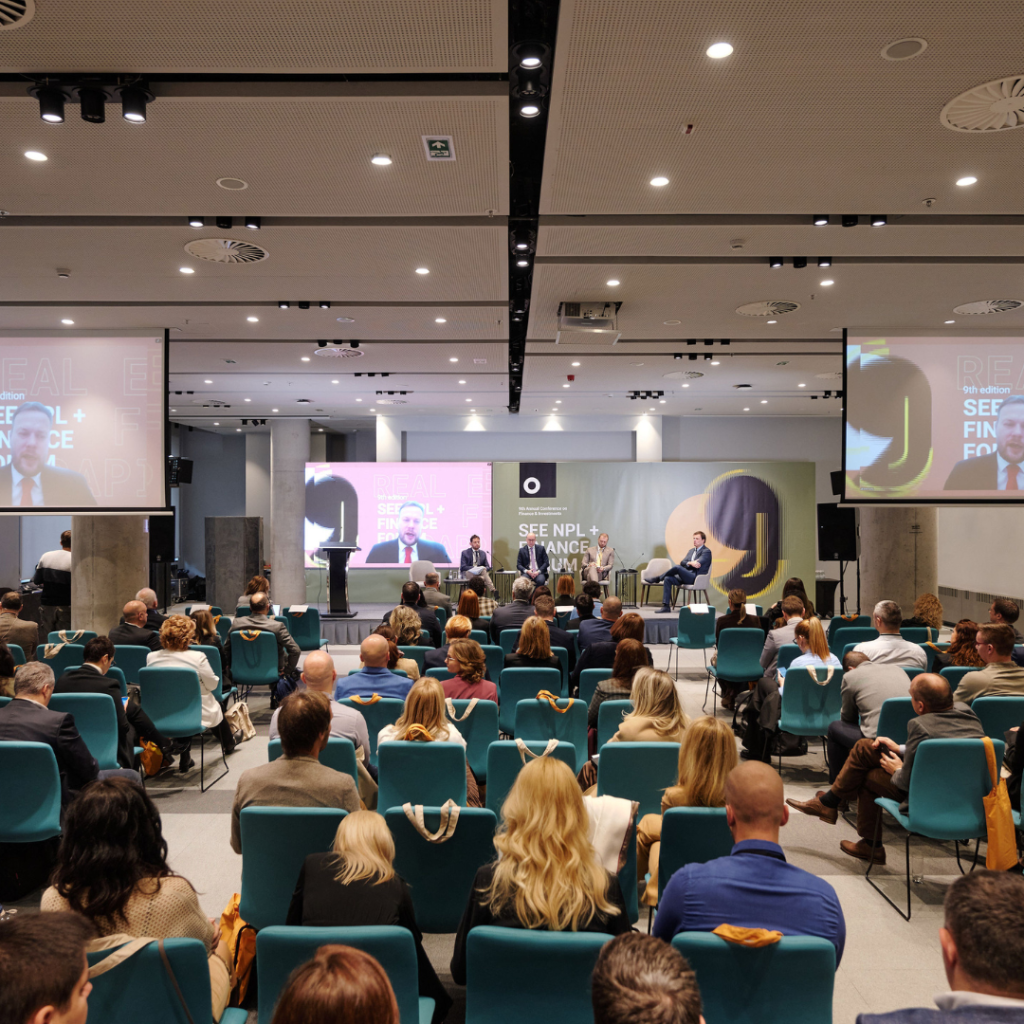
NAC: PAIH has participated for three consecutive years as an institutional sponsor of Finticipate and the SEE NPL + Finance Forum. What does your presence at such local events represent for you, and what benefits does this type of cooperation bring to the Polish and Serbian business communities?
PAIH: We observe that at local events, participants are generally well connected and familiar with opportunities and developments in their respective industries. This applies not only to industrial solutions and FMCG, but also to high technology, finance, and both micro- and macroeconomics.
For us, your events primarily represent an opportunity to understand the direction in which the market is moving, what has changed in the meantime, and what creative mechanisms Serbian companies are using to enter new markets. This extensive knowledge base enables us to provide more effective business support to both Polish and Serbian/regional clients. High technology in Serbia and the region holds significant growth potential that is still waiting to be fully realized. Our role, through both formal presentations and informal discussions, is to share insights from the Polish market, exchange best practices, and contribute to strengthening an authentic Serbian and regional technology ecosystem.